

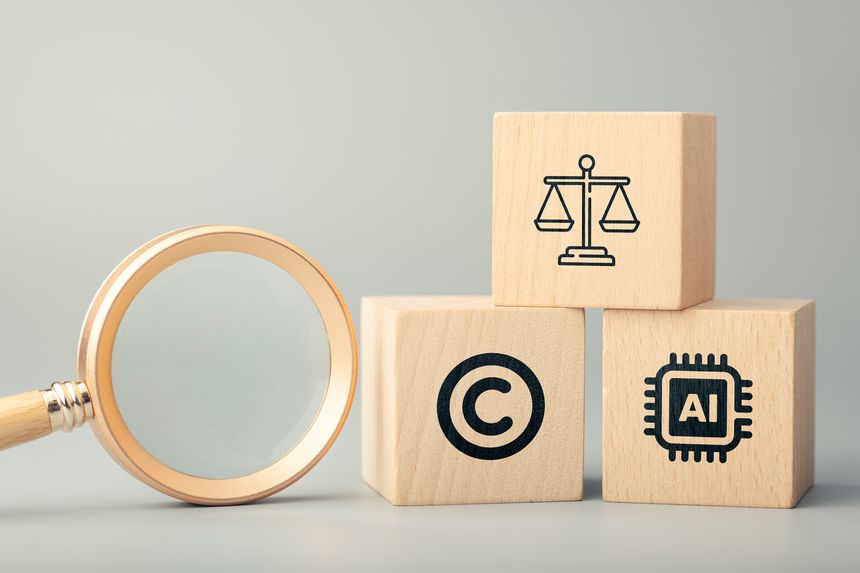


The rise of generative Artificial Intelligence (AI) tools has revolutionized the workflow of modern inventors. From drafting initial technical summaries to refining engineering prose, platforms like ChatGPT, Gemini, Claude, and specialized code generation models offer unprecedented productivity gains. However, this convenience hides a critical legal vulnerability. For unsuspecting innovators, feeding novel ideas into a generative AI model can constitute an unintentional "public disclosure"—a catastrophic misstep that can completely void your ability to secure a patent.
The Legal Boundary of Novelty
To qualify for patent protection under almost every global jurisdiction, including the United States Patent and Trademark Office (USPTO) and the European Patent Office (EPO), an invention must be strictly novel and non-obvious. A fundamental pillar of patent law is that an invention cannot be patented if it was publicly disclosed anywhere in the world before the official filing date. While the United States grants a fragile 12-month grace period for disclosures made directly by the inventor, most foreign jurisdictions enforce absolute novelty. In Europe or Asia, any public disclosure prior to filing permanently kills your patent rights on the spot.
How Prompting Equals Public Disclosure
The core danger lies in how public disclosure is legally defined. If a piece of information is made available to any member of the public without an explicit obligation of confidentiality, it enters the public domain. When you input an inventive concept, architectural block diagram, or a proprietary code snippet into a commercial generative AI tool, you are transferring that data to an external server managed by a third-party corporation.
Unless you are utilizing an enterprise-grade contract with explicit data-privacy guarantees, standard consumer-facing AI terms of service generally grant providers the right to review your inputs and use them to train future iterations of their models. If your proprietary algorithm or mechanical design is incorporated into an AI’s training dataset, that knowledge can later be generated as an output for a competitor. In the eyes of patent examiners and courts, you have effectively broadcasted your unpatented invention to the world.
Protecting Your Intellectual Property in an AI Era
Inventors do not need to abandon AI entirely, but they must cultivate disciplined procedural safeguards to shield their intellectual property during the critical pre-filing stage:
- Audit the Terms of Service: Never assume an AI interface is private. Free versions of AI tools almost always default to utilizing user prompts for model training. Review the data-governance policies to see if you can explicitly opt out of data sharing.
- Deploy Enterprise-Grade Solutions: Only utilize corporate or enterprise tiers of AI tools that legally guarantee zero-retention policies, where inputs are treated as strictly confidential and are isolated from the public training pool.
- Anonymize and Generalize Your Prompts: If you must use standard AI tools to polish technical text, strip away the inventive core. Replace highly specific structural dimensions, chemical formulas, or novel algorithmic steps with generic placeholders (e.g., "Component X" or "Function Y"). Refine the prose of the background section rather than the novel solution itself.
- File a Provisional Patent Application First: The most robust defense against accidental disclosure is establishing an early priority date. File a provisional patent application capturing your core invention before utilizing any digital third-party tools to draft your comprehensive utility specifications.
Conclusion
Generative AI is a phenomenal accelerator for articulation, but it remains an existential threat to exclusivity when mismanaged. In the race to protect your intellectual property, treat every AI prompt box exactly like a public microphone. Until your patent application (either design, utility, or plant patent application) is safely on file with the patent office, silence regarding your core inventive step remains your single greatest asset.
/Passle/678034865f458907b06ca7a9/SearchServiceImages/2026-06-25-15-58-57-572-6a3d50411150189b8ac26f9f.jpg)
/Passle/678034865f458907b06ca7a9/SearchServiceImages/2026-06-08-18-42-18-875-6a270d0a732d4df5ed36c0d5.jpg)
/Passle/678034865f458907b06ca7a9/SearchServiceImages/2026-06-08-15-27-40-322-6a26df6ce92742e48e73dbeb.jpg)